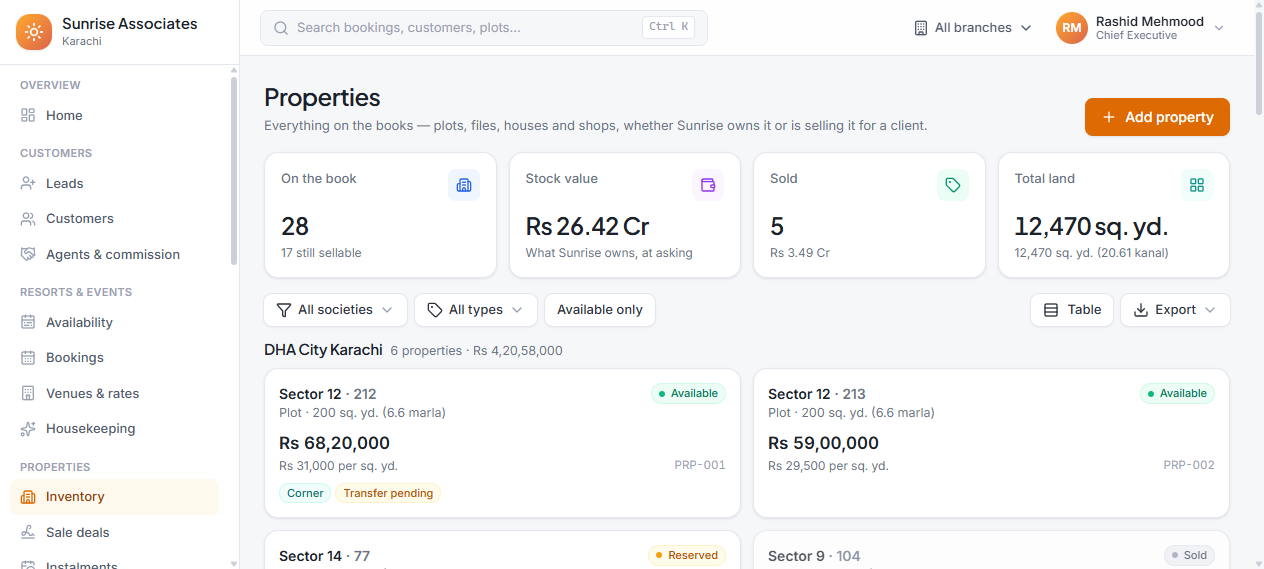
Unit & plot inventory
Every unit with its status, dimensions, category and price, with enforced status transitions.
Real estate · Property management
Property in Pakistan is sold on instalments and managed on relationships — which means the hard part is not the sale, it is the ledger that follows it for the next five years. Linksoft builds real estate software where the plot, the plan, the payment and the ledger are one record.
A development sells units against payment plans that run for years, with down payments, monthly instalments, half-yearly balloons, possession charges and development charges — each of which can be rescheduled, discounted or defaulted on. Track that in spreadsheets and the errors are not caught for months, because nothing forces the schedule and the receipts to reconcile.
A built system makes the plan a live object: every unit has its plan, every plan has its schedule, every receipt posts against a specific instalment, and the outstanding position is a number the office can quote to a customer on the phone without checking anything.
Plot and unit inventory carries status — available, reserved, booked, sold, transferred, cancelled — and the status is enforced by the system rather than by whoever answers first. Transfers between buyers, cancellations with their refund rules, and merges or splits of units are recorded as events with an audit trail, because in real estate a disputed history is an expensive problem.
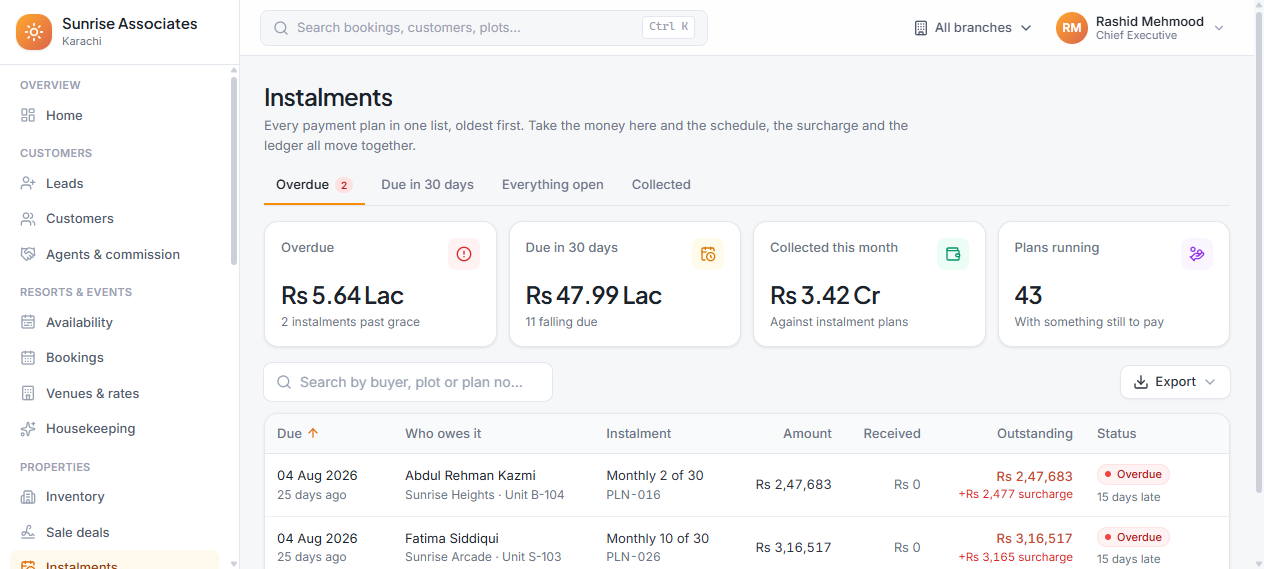
For a developer, recovery discipline is cash flow. The system surfaces what is due this week, what is overdue and by how long, who is responsible for chasing it, and what was promised on the last call — with reminders sent by SMS or email automatically rather than when someone remembers.
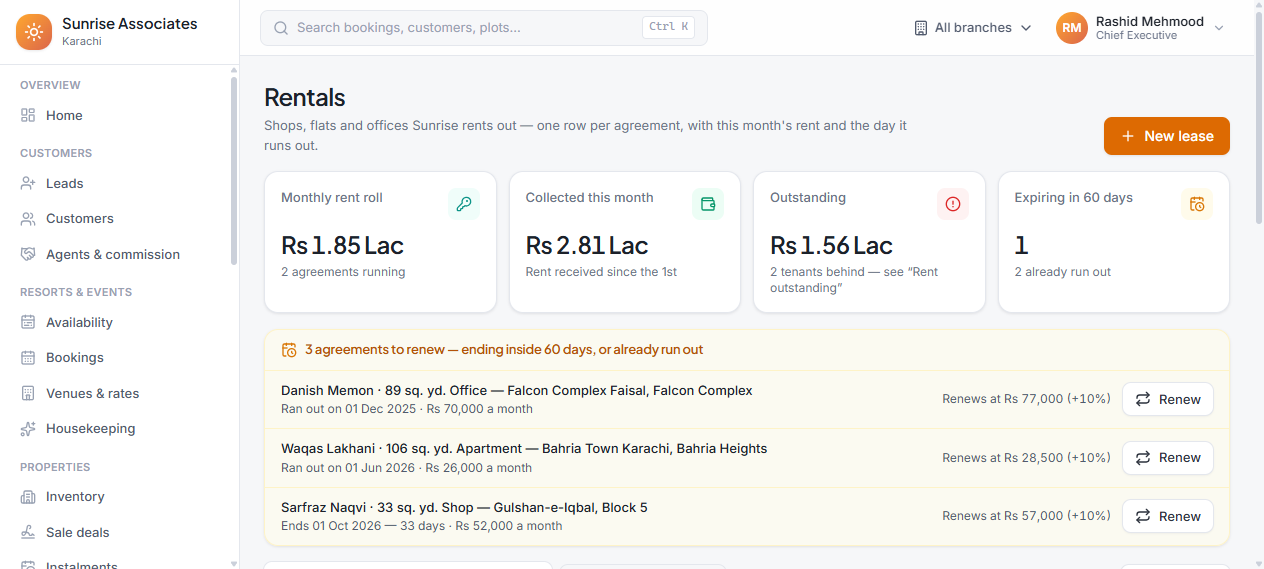
For property managers and landlords the same machinery runs tenancy: leases with their escalation dates, rent due and received, security deposits, maintenance requests and their costs, and utility recharges — with owner statements produced by the system rather than assembled by hand each month.
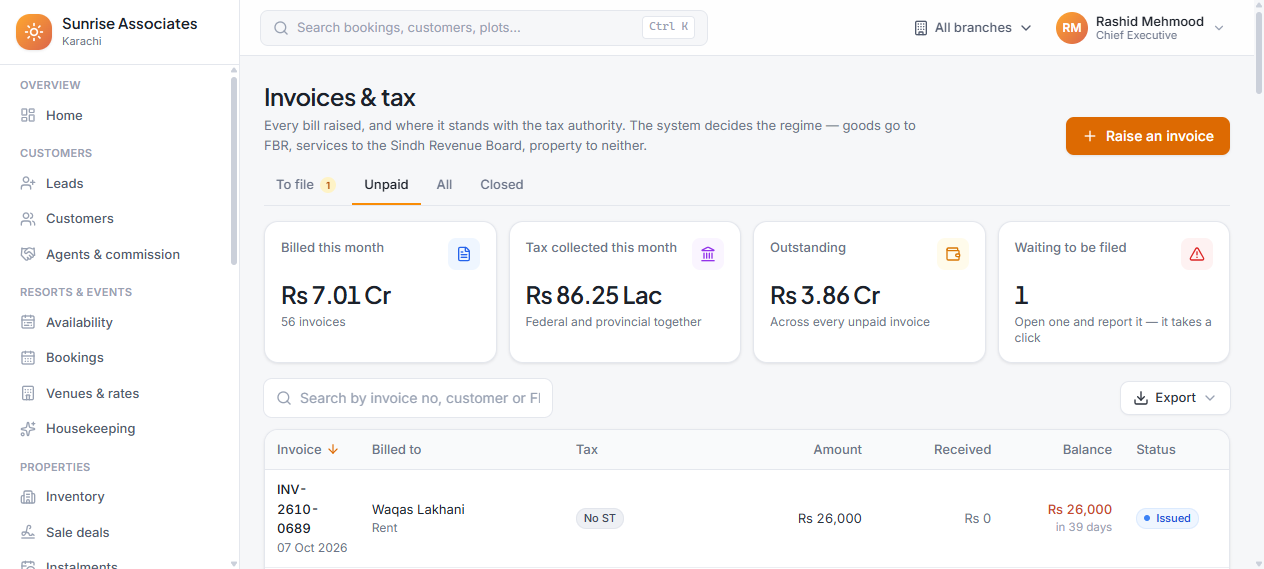
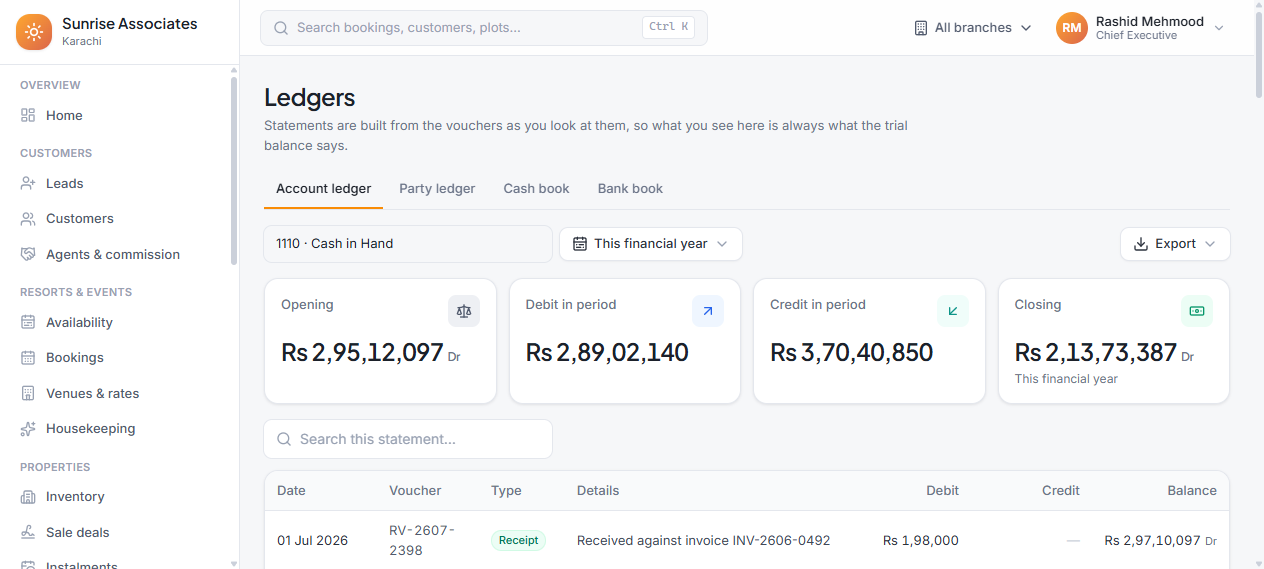
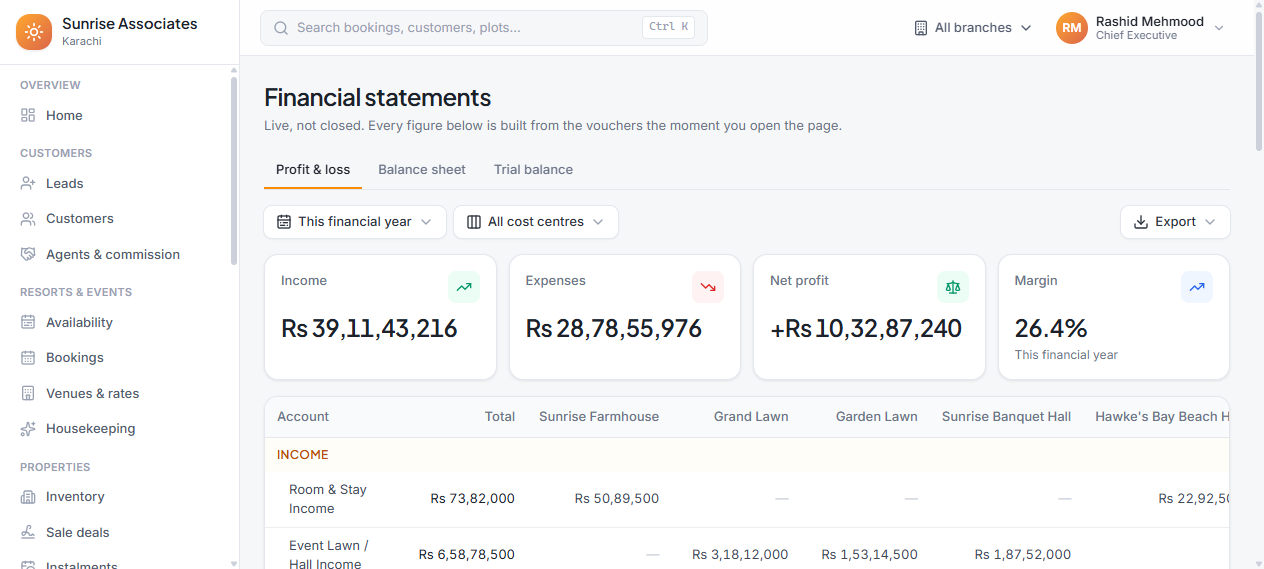
Receipts, refunds, commissions and expenses post into double-entry accounts as they happen, so project-wise profitability, party ledgers and the trial balance come from the same records the sales office works in. Where the business is registered for sales tax, FBR-compliant invoicing issues from the same flow.
Modules are configured to your operation during scoping — you take what your business runs on and leave what it does not.
Every unit with its status, dimensions, category and price, with enforced status transitions.
Down payment, instalments, balloons and possession charges scheduled per unit.
Buyer records, transfers, cancellations and refunds recorded as auditable events.
Due and overdue positions by buyer, with automated SMS or email reminders.
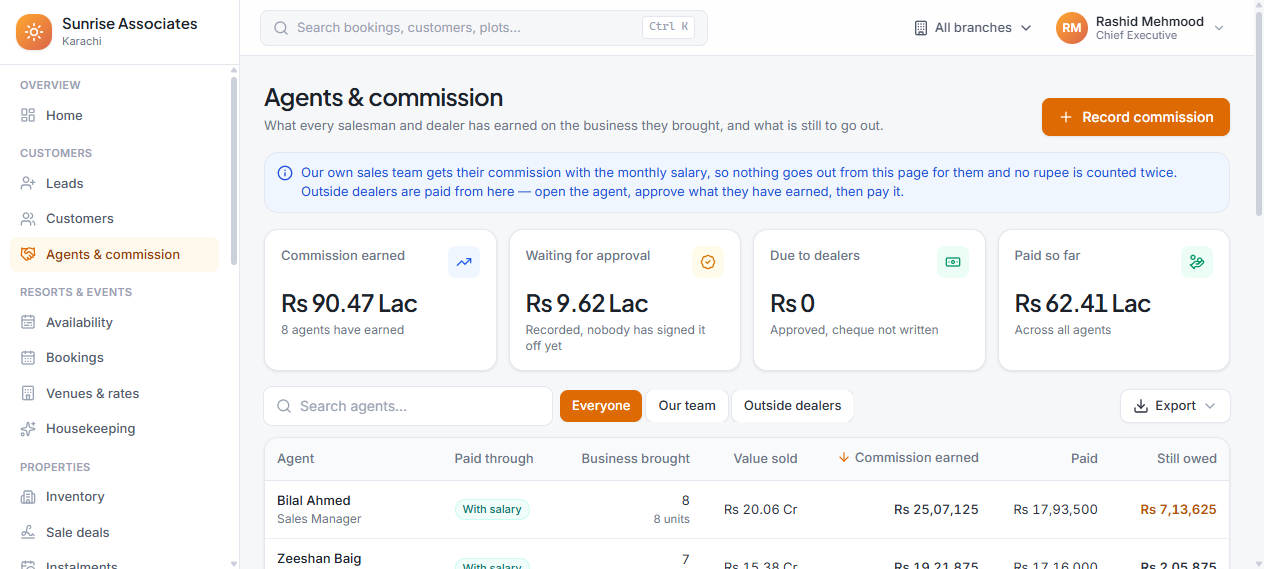
Dealer-wise bookings, commission calculation and payment tracking.
Leases, escalations, rent, deposits and maintenance for managed properties.
Per-owner income, expense and net statements produced by the system.
Double-entry books with project-wise profitability and party ledgers.
Real estate is on our owner-verified list of industries served, and the mechanism at the centre of a property system is one we have run for twenty-eight years: a scheduled-charge ledger that generates instalments, accepts partial payments against specific dues, reports outstanding by party in real time, and posts every movement into double-entry accounts.
In our school system that mechanism generates fee vouchers, chases defaulters and reconciles collections for a whole school. Instalment plans are the same engine over a longer schedule. That is an honest description of where our confidence comes from, and it is checkable — the school system is live.
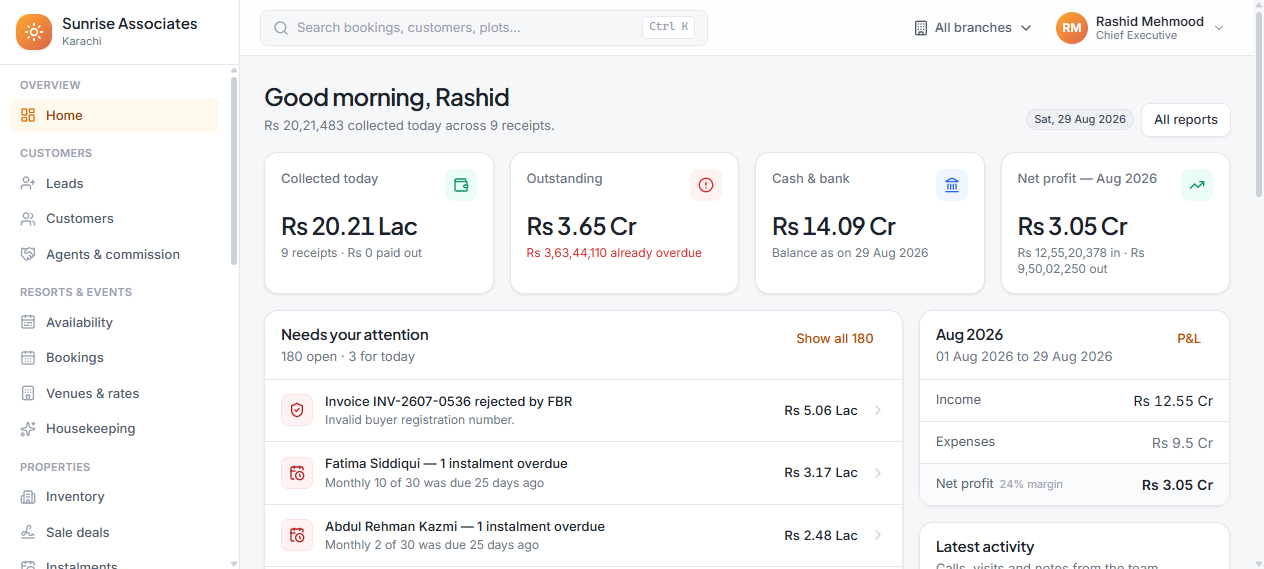
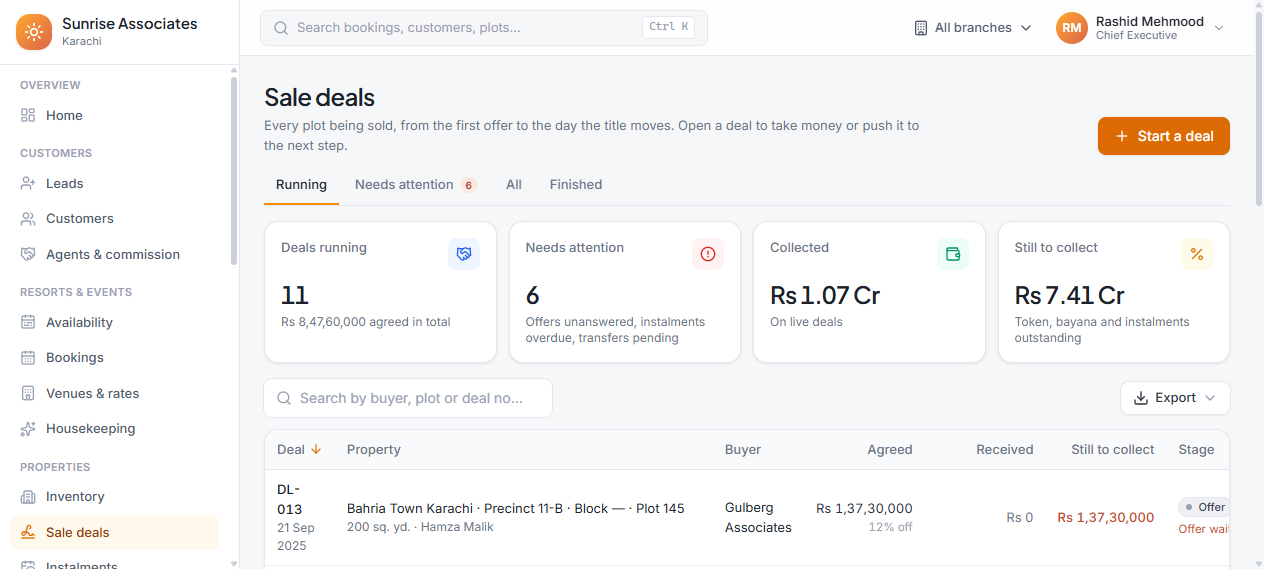
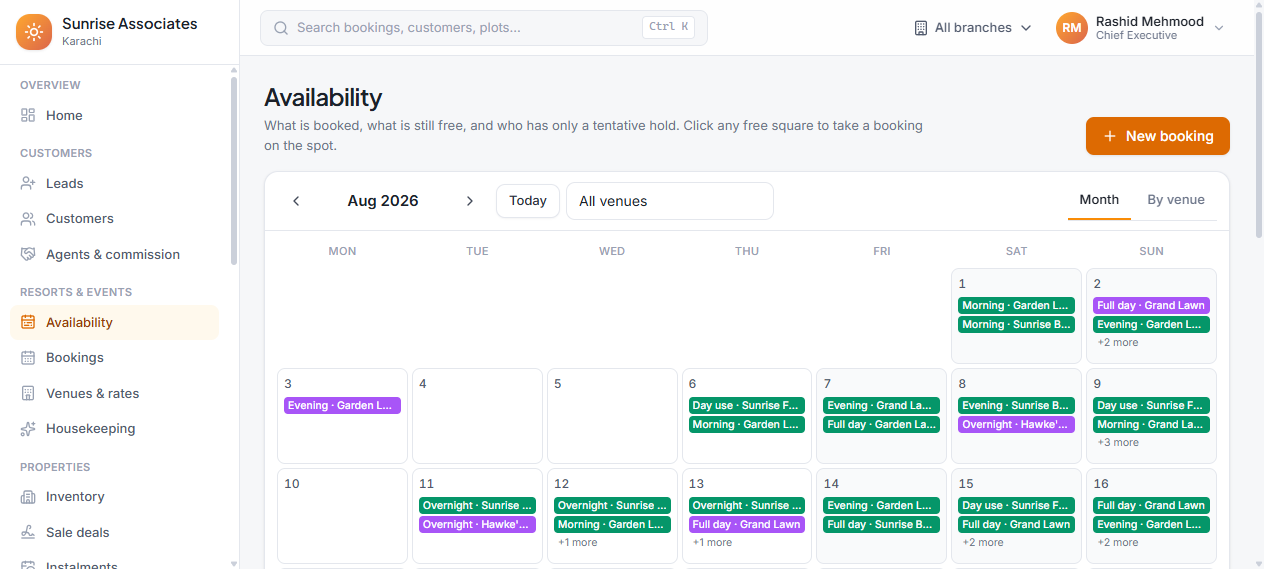
See the client register →A property and estate system is in active development, built around the instalment plan rather than bolted onto it: plot and file inventory by society, deals from first offer to transfer, the recovery list with surcharge, dealer commission, tenancy, and books that close themselves. These are real screens from it.
Sunrise Associates is an invented company, and every buyer, plot, figure and agreement shown is sample data we created for development. It is not a client and does not represent a live deployment. The societies named on these screens are real Karachi locations used as plot addresses in the sample data, nothing more.
Yes — that is the core of the system. Each unit carries its own plan with a full schedule; receipts post against specific instalments; and the outstanding position per buyer is live rather than reconstructed.
Yes. Units carry an enforced status and the transitions between statuses are controlled by the system with an audit trail, so a booking is a record rather than an understanding between two people.
Yes — automated SMS or email reminders on a schedule you set, with the office also seeing what is due, what is overdue, who is chasing it and what was promised last.
Yes. Leases with escalation dates, rent due and received, security deposits, maintenance requests and their costs, plus owner statements produced by the system rather than assembled by hand.
Yes — bookings by dealer, commission calculated against the agreed structure, and payments tracked against what has been earned.
Yes, with project-wise inventory, recovery and profitability reporting, and consolidated figures for the owner across all of them.
We scope on-site, specify in writing, and tell you honestly whether custom software is the right answer — before any commitment.